Big men should be under the basket. We have too many three point shooters. Tell Bukky to stop hanging out on top of key
Missed chance for a win! Mahi needs to stop dribbling so much. These bigger arenas are harder for mid-major teams to shoot 3’s in. Both teams struggled. Herb should have figured that out by now.
The boys battled hard, and it’s always tough to take a loss in a game where it felt like the Broncos controlled things for long stretches. They shot an impressive 82% from the line, committed 12 turnovers, and managed just two points in the paint. Rebounding was dead even at 37 apiece. Overall, those numbers track with what we’ve seen this season—aside from the hot free-throw shooting.
Saint Louis, however, executed better in the late-game moments, especially during the Broncos’ scoring drought over the final 5:22. Shooting 37% from the field and 27% from three is a difficult combination to overcome. And while this team’s defensive identity continues to be its anchor, there’s no question a more stable offensive presence would go a long way.
One bright spot: the boys were better in both offensive and defensive free-throw rate, something I’ve been emphasizing all year. Still, the warning signs were there early when the Broncos fouled into the double bonus with 10 minutes remaining. From that point on, the margin for error all but disappeared.
4 Likes
I’m curious about the decision not to take the timeout. Did Herb just think we had a better chance with a quick inbound and push up the court? I too would’ve liked to see the TO called.
Regardless, I think come end of the season this will be a “quality” loss. In past years, we far too often would lose to a Q3/Q4 team (sometimes OOC, sometimes in WCC play) that would stain the rest of the season.
I think this. I actually don’t hate the strategy. I’m not sure, but I believe the buzzer beaters by Jalen against BYU and by Adama against Gonzaga came without timeouts, letting the Broncos get the ball down the court without giving the defense time to plan.
In both those games, SCU had a clear “go to” guy who was going to take that last shot. Santa Clara doesn’t have that this season yet. Mahi and Hammond being the closest but neither as dominant in the iso as Williams or Bal could be. That would be my argument for calling a TO–you need a set play if you don’t have a hero.
There’s a judgment call, obviously. But similar to how the “foul up three” strategy backfired on SLU last night, deciding whether to call a TO to set the final play is one of those things that gets determined by hindsight. It has worked this way for Herb before, didn’t against SLU.
5 Likes
I’m not sure that’s a good analogy. To me, the strategy of fouling before a 3 was CLEARLY statistically the right call. Five separate events had to happen for SLU to lose: (1) the FT shooter (a freshman) had to make the first free throw (81% FT shooter); then (2) the FT shooter had to miss the shot in an ideal way; then (3) Stanford had to get the rebound (per KenPom, only about 20% of missed free throws are rebounded by the offense); then (4) the rebounder had to get a clear pass to someone at the 3-pt line to take the shot (which shouldn’t have happened, the 3-pt shooter’s defender reacted late to shooter’s move to the corner); and finally (5) the shooter (in this case, a 37% career 3-pt, though 46% this year, we’ll use the higher number) had to make the shot.
Just taking 1, 3, and 5 together (0.81 x 0.2 x 46%) suggests a 7.5% chance of success. Throw in some factors for 2 and 4 and probably get down to 1-2%. Compare that to not fouling and letting the opponent try a 3-pt shot at even a 25% success rate.
A bad outcome doesn’t negate a good decision. I’d do what SLU did every time.
Anyway, I’ve gone off on a tangent, I just get irritated when I hear people challenge the wisdom of fouling to prevent a buzzer 3. (I know you weren’t necessarily arguing that, just making an analogy).
Ultimately, your point about a “go-to” guy is more salient. The question coaches have to answer is whether their team has a higher percentage chance of scoring (a shot itself plus chance of drawing a foul) via a set play from out of bounds or by a quick inbound after the shot and pushing up the court (ideally putting the ball in the hands of a “go to” guy).
To be fair, a go-to guy can still succeed after a TO. Tyus Edney comes to mind:
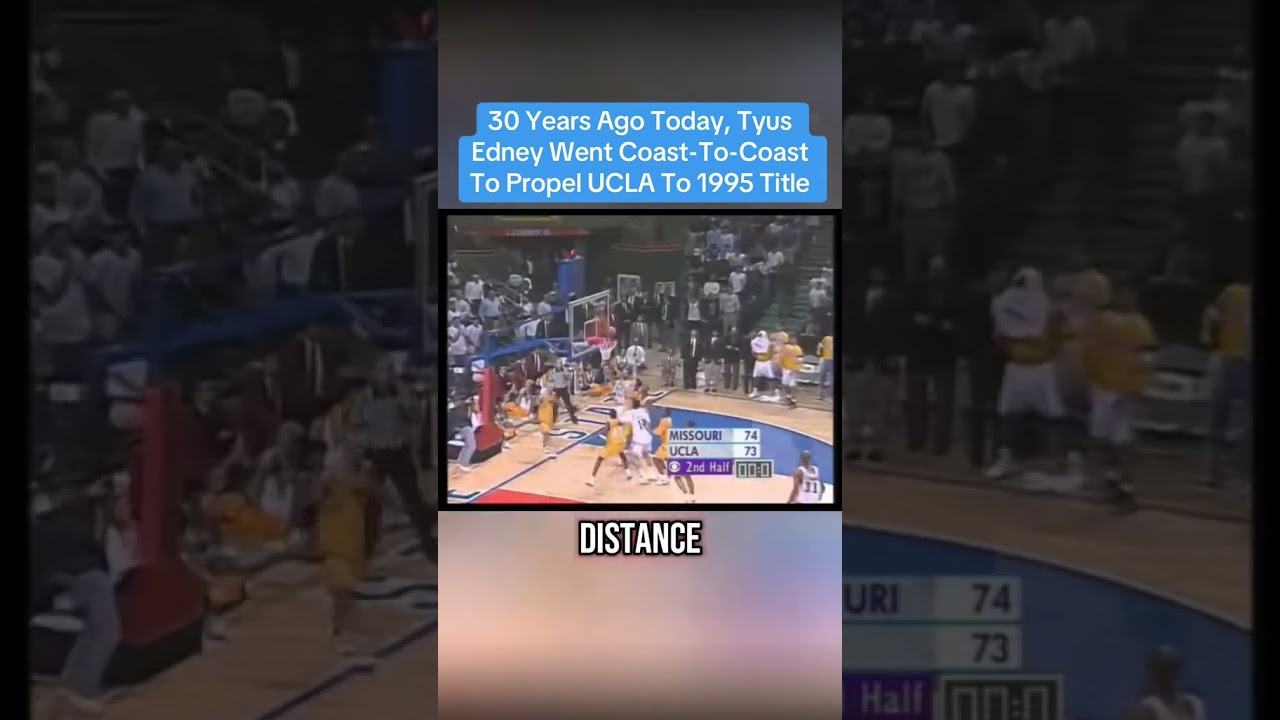
My immediate inclination at the time was to call TO, but I understand the rationale and am not upset about Herb’s decision. It just didn’t work out.
2 Likes
Yeah, I don’t really claim a side in the fouling-up-three strategy overall. I just used it as an example of a judgment call where the outcome really dictates how folks feel about it–and perhaps as a poor analogy, like you suggest.
The Wizard himself did a pretty thorough analysis of this, albeit a decade ago. It’s worth a read. I’m not sure if any of the underlying data have changed. It’s possible that fouling-up-three is more successful now because more players shoot the three than in 2013, so you have more shooting threats on the court in the final play.
https://kenpom.com/blog/yet-another-study-about-fouling-when-up-3/
2 Likes
Interesting, thanks for sharing. I’d like to see more up-to-date statistics to understand if that analysis has held up over the years, but this dataset is clear: there is no statistically significant difference between either approach.
I’ll stick to my previous argument, though, that too many different things have to succeed for the opponent to overcome the foul strategy.
I’m glad Buckets was paying attention in his Business Statistics class. His analysis is spot on. Separately, I like Herb’s decision not to call a timeout. There’s an advantage to attacking a defense before it’s set up….if you’re organized. We weren’t and ended up with a low percentage shot taken by someone other than our best shot creator.
3 Likes
Worse, a combination of SCU Engineering school curriculum and working as a graduate assistant for a Decision Analysis professor in MBA school. 